


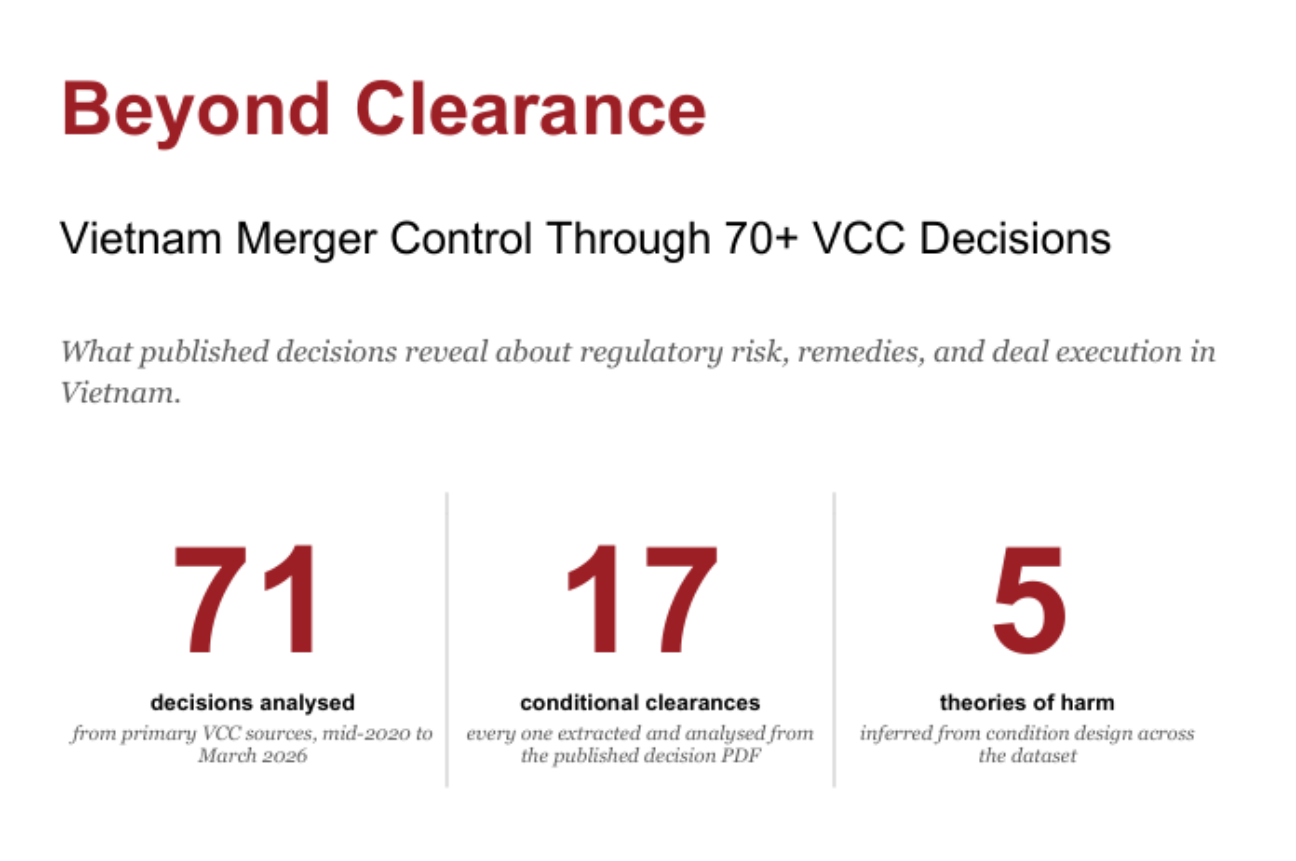
This is the first analysis of Vietnam merger control built from primary VCC decisions, covering all 71 published outcomes from mid-2020 to March 2026.
But the value is not the dataset. It is what the decisions reveal.
Vietnam’s merger control regime has not evolved through legislation. It has evolved through enforcement. The VCC is building a regulatory system deal by deal, using conditional clearances as its primary instrument.
Vietnam does not operate a clearance regime. It operates a conduct regime.
The VCC is imposing perpetual, transaction-specific behavioural regulation with no sunset clause. Conditions are no longer generic compliance undertakings. They are bespoke tools targeting specific competitive risks: pricing formulas, supply access, distribution control, capacity allocation, and, in some cases, the acquirer’s entire value chain.
Three structural shifts define the current regime:
- From template to design: in under three years, conditions have moved from boilerplate reporting to transaction-specific regulatory frameworks calibrated to the identified harm.
- From transaction to group: the VCC tracks cumulative position across sequential acquisitions and escalates obligations at the portfolio level, not the deal level.
- From competition to outcomes: in sensitive sectors, the VCC is beginning to require positive economic commitments, including consumer access, technology transfer, and capability upgrades.
The practical risk in Vietnam is not prohibition. It is indefinite post-closing regulation attached to clearance.
If you are advising on or executing deals in Vietnam, this report shows what the VCC actually does: how it defines markets, how it identifies risk, how it designs remedies, and how those remedies will affect your transaction before and after closing.
Read the full report below — decision by decision, condition by condition. Understand how the VCC will assess your deal.
Vilasia_Deep Dive Beyond Clearance (EN).260420 (Final-Protected)